ICE whistleblower: New agents came to Minnesota untrained
- ICE Abuse

- Feb 25
- 2 min read
Original Article By: MPR News
A former lawyer for Immigration and Customs Enforcement who helped train new agents said the agency’s training academy is deficient and broken. Ryan Schwank became a whistleblower after he resigned earlier this month. He then went public during a forum held by congressional Democrats on Monday.
Schwank began working in a trainer role on a temporary basis in September. He said he was brought in because they needed more staff to handle the influx of recruits. The Department of Homeland Security rapidly scaled up the number of deportation officers and offered $50,000 sign-on bonuses.
In Schwank’s first interview with local news in Minnesota, he told MPR News that he was concerned about policies from day one, when he was shown a memo that instructs ICE officers to enter a home without a judicial warrant.
“A supervisor who made it very clear … that not teaching the memo or opposing the memo could cost me my job,” said Schwank.
Additionally, Schwank noticed use-of-force training was paired down into one lecture that focused mostly on policy; and that the number of days of training were cut down from 70 days to 42 days. DHS said in a statement that it “streamlined training to cut redundancy and incorporate technology advancements, without sacrificing basic subject matter content.”
Schwank believes that ICE isn’t changing its training in a way that justifies a drop in training hours.
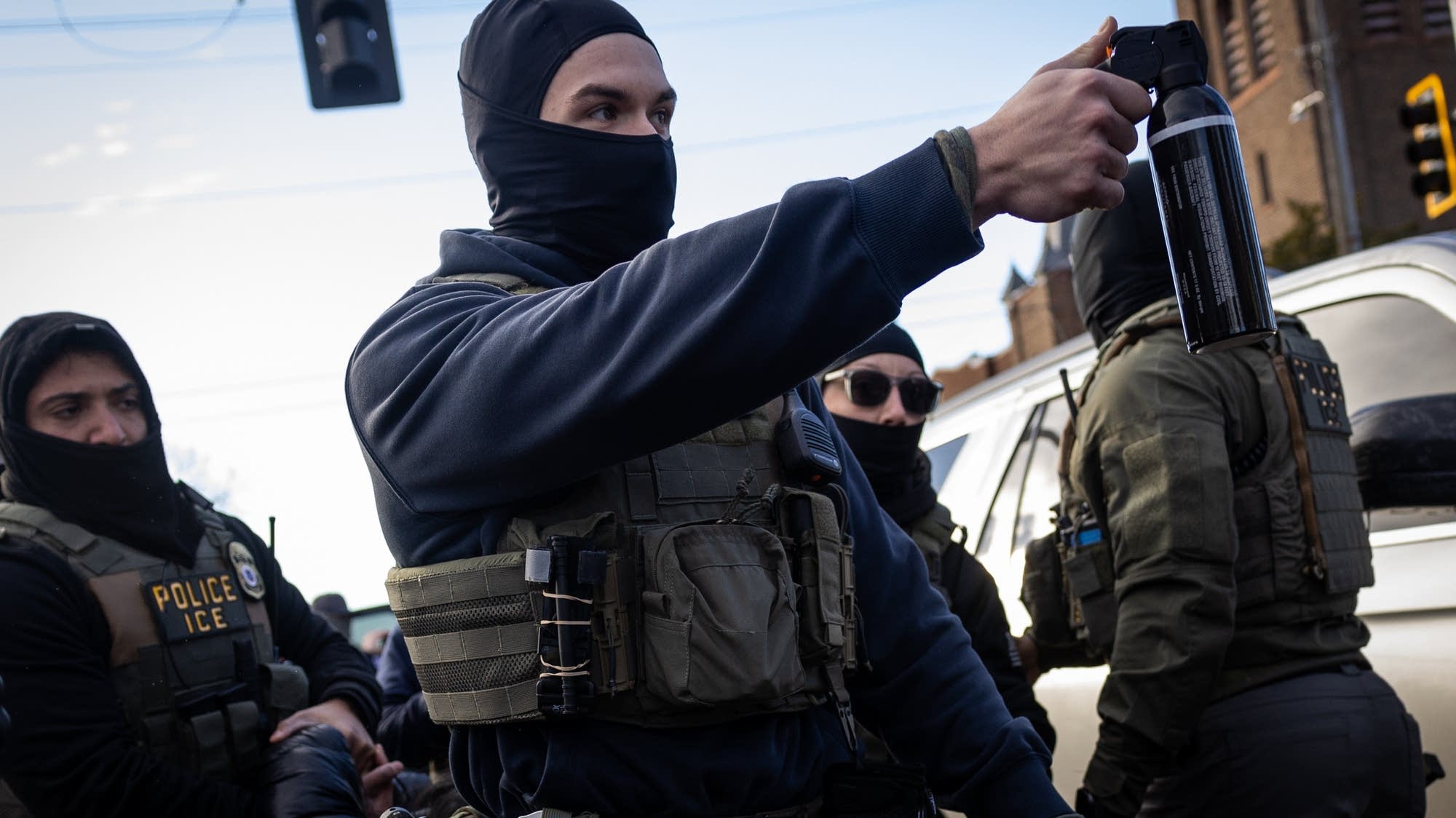
In his testimony to congress, Schwank said he witnessed a training scenario where they had a bystander filming and the trainee pepper sprayed the bystander. When he asked the trainee why he did it, he said it was because it was what he saw ICE agents doing in Minneapolis.
“Even when they take egregious violations of regulations, safety or policy, they still graduated.”
Schwank said the trainees themselves recognized they were not fully trained and some would come to him saying they didn’t feel ready. Instructors would also tell Schwank in confidence their concerns that training was insufficient. Those conversations, Schwank said, illustrated a “culture of fear” inside the academy.
Schwank said hundreds of officers were sent out into the field, and many ended up in Minnesota. “I'm certain there are officers in Minneapolis who don't have the comfort with the training they received to be confident when they're on the streets.”
Schwank stayed in his role for around six months with a hope that he could make a difference and help ensure trainees were getting a full understanding of the law, but that ultimately he felt he couldn’t keep trying to “patch a broken system.” He hopes that by speaking out, officers will get better training. But until then, Schwank says he’s worried that more tragic incidents will take place.
“What's going to come down the road is even worse than what's already happened,” said Schwank.
