ICE agents at Twin Cities hospitals alarm medical staff
- ICE Abuse

- Jan 14
- 5 min read
Article written by: MPR News
Health care workers in the Twin Cities report that U.S. Immigration and Customs Enforcement agents are entering hospitals with detained individuals, sometimes with warrants and sometimes without, and they are frequently present during patient care.
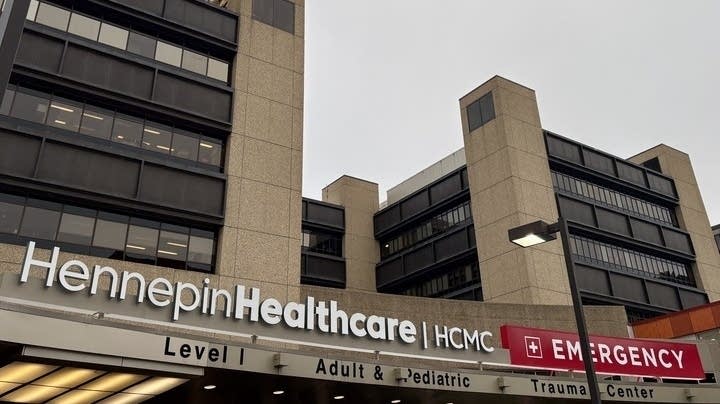
Their presence is terrifying medical staff and raising concerns about patient care, according to five nurses at HCMC hospital in Minneapolis who asked to remain anonymous for fear of losing their jobs.
“A part of me wants to go on the news with my face and scream this at the top of my lungs,” an HCMC nurse said. “But I am very much right in the middle of this.”
Community organizers from Unidos MN, an immigrant advocacy nonprofit, told reporters last week that federal immigration officers were present inside the hospital without a judicial warrant. The officers were reportedly at the bedside of a patient receiving medical care for over 24 hours.
Health care workers said that the patient was denied family visitation and was at times shackled to the bed and not given privacy.
A Hennepin County Commissioner and state legislators showed up at HCMC, prompting immigration officers to leave after speaking with them, according to Unidos MN.
"Our Hennepin County commissioners worked with leadership of the hospital, including the leadership of security, established that there was no judicial warrant and told them that they had to leave and they left," said Minnesota state Rep. Aisha Gomez, DFL-Minneapolis.
HCMC addressed the incident in a statement, noting that any federal agents who arrived with a patient presented proper identification, followed their established protocols and left after security requested documentation to verify their presence at the hospital.
A nurse at HCMC said that during the past weekend, they were alerted to a patient in the stabilization room where ICE agents were present.
The stabilization room serves as the critical care space at HCMC, designated for patients experiencing medical emergencies. It is a large, open room with four beds and extensive medical equipment.
According to the nurse, ICE agents were at the bedside while this patient was receiving care but also had a clear view of other patients and could overhear their personal health information being discussed.
Hospitals wrestle with ‘how much of a confrontation they want’
Generally, agents do not require warrants to enter hospital lobbies or waiting areas. ICE agents with a judicial warrant can access private areas of a hospital or obtain patient information.
An administrative warrant — one that does not come from a court — does not grant that permission and agents can be asked to leave, according to the Minnesota’s Attorney General’s Office.
The American Civil Liberties Union advises that hospitals and health care centers should allow ICE agents into any areas open to the general public. A primary concern revolves around where ICE is permitted to go.
“This is the question of the hour,” said David Wilson, managing attorney of Wilson Law Group, a Twin Cities-based immigration law practice.
Wilson said that if an individual is in ICE custody, ICE becomes the legal custodian responsible for the person’s health care until a court order is issued for their release.
“It's no different than when someone is injured by police officers when taking them into custody. The Minneapolis police don't just walk away from the room. They put someone right outside the door, and they make sure that the person's handcuffed to the bed,” Wilson said. “ICE is treated in a similar fashion, where this is someone that we've detained.”
He noted that there are substantial privacy issues and that the dynamic is complicated for everyone involved.
Wilson said that hospitals are within their rights to push back and explain to ICE agents that they are conducting an examination and a person’s privacy may be compromised during a physical exam, and hospitals can ask the agents to wait outside the room in the hall.
“If they don’t, well, then the hospital runs their own hospital, and they can then decide how much of a confrontation they want,” Wilson said. They don't have to let ICE decide who’s in the room. But that doesn't mean that they can tell the ICE agent to leave the building, because they're still the custodian. “And so, you have this tension in those moments of privacy versus still having legal authority.”
HCMC nurses expressed their concern that patients are not getting the respect and privacy they deserve in the hospital setting. They said that federal agents were present while a patient was being bathed.
One nurse said that it does not feel like a safe environment for anyone when armed federal agents are walking around with guns. Another nurse mentioned that it is challenging to remain calm and focused on patient care with armed agents just four feet away.
Several nurses mentioned that there are rules in place for when ICE shows up at the hospital, but they feel these rules are not being followed. They said federal agents appear to operate without restrictions.
Patients ‘treated like criminals’
Similar concerns have surfaced at Regions Hospital in St. Paul.
Hwa Jeong Kim, vice president of the St. Paul City Council, said the wife of a patient at Regions was recently denied access to her husband, who has a serious medical condition. Ultimately, the wife was asked to leave the hospital or face trespassing charges, so she left.
The wife was told she needed to contact ICE to get any medical information, to check if agents had a proper warrant and to know whether her husband was being detained, Kim said, adding that when his wife tried to call, ICE did not answer.
“Patients are being treated like criminals,” Kim said. “Immigration is a civil matter. We are hearing incidents where loved ones of these families are being shackled to beds, and so, ICE being at a hospital just puts everyone at risk.”
HealthPartners, the Twin Cities-based health care organization that owns and operates Regions, said in a statement that when a patient is in custody, law enforcement personnel may be permitted to accompany them along with a security team to ensure that all policies are followed.
An internal document for HealthPartners staff emphasizes that HealthPartners complies with all state and federal patient privacy laws, and information about patients, including their location in a hospital or clinic, cannot be released unless the appropriate legal process is followed.
Staff members are encouraged to contact hospital security if representatives from ICE wish to speak to anyone on a HealthPartners campus.
In a statement shared with MPR News, the Minnesota Hospital Association emphasized that Minnesota hospitals provide medical care to anyone who needs it “regardless of citizenship or legal status, as required by law.”
“Hospitals are not immigration or law-enforcement agencies and do not enforce criminal, civil or immigration laws,” the organization said. “We understand that immigration enforcement actions can cause fear and uncertainty for patients and health care workers.”
The heightened ICE presence, though, is magnifying those concerns, the HCMC nurses said.
“No one deserves healthcare less than another person,” said one of the nurses who spoke to MPR News. “We dedicate our entire lives to caring for others, and now, all of a sudden, we are expected to decide that some individuals deserve it less than others and that they shouldn't have the same rights as the person in the next room. It’s absurd."
